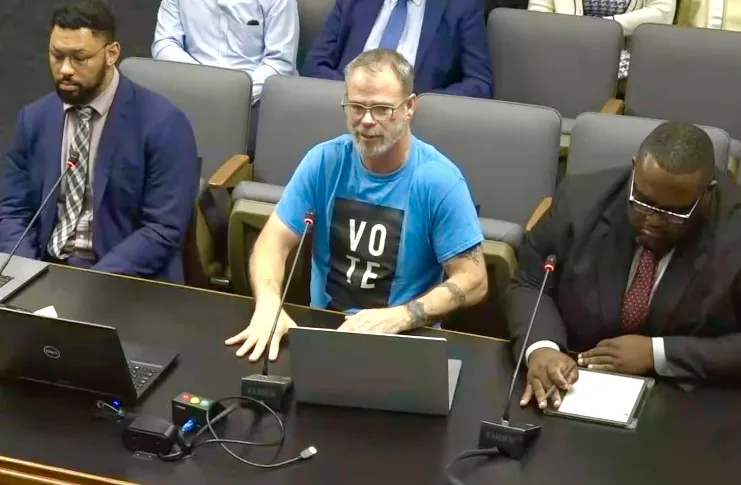
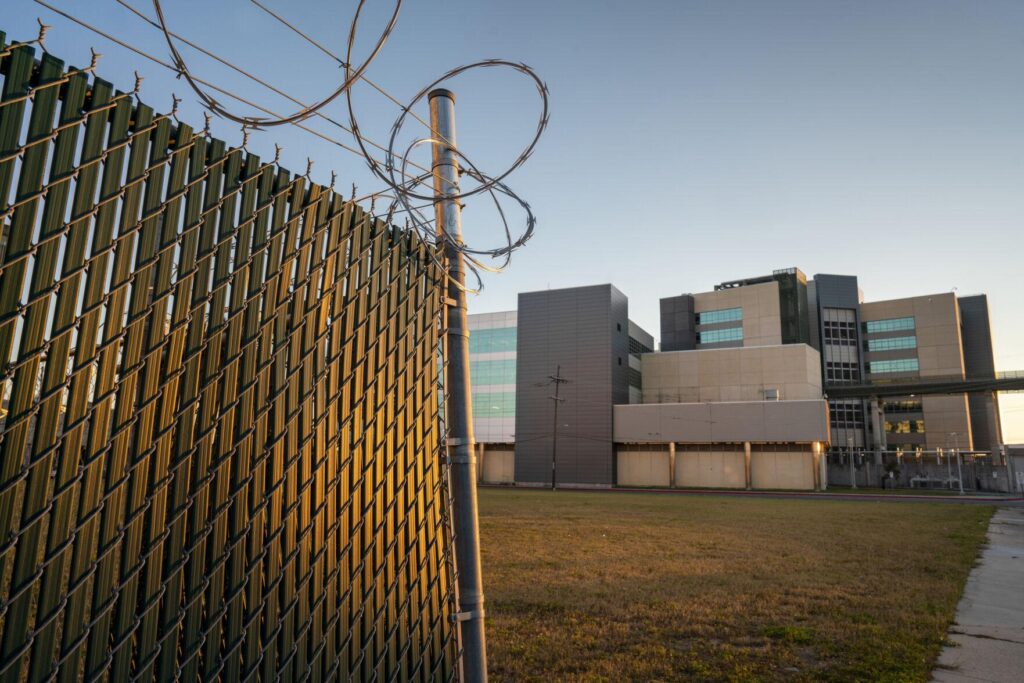
Campaign Legal Center (CLC) is representing Voice of the Experienced (VOTE) and an incarcerated first-time voter in a case challenging laws which bar eligible, first-time voters in East Baton Rouge jail from voting. Many people in jail are eligible to vote, such as those who are pre-trial or serving misdemeanors, which usually do not affect voting rights. This right to vote is protected under state and federal constitutions. But for some jailed voters in Louisiana, this constitutional promise is impossible to fulfill. Read more on this loophole that silences voters here.
Campaign Legal Center and Voice of the Experienced (VOTE) Challenge Laws in Louisiana that Disenfranchise First-Time Voters in Jail
EAST BATON ROUGE, La.— On Thursday, December 11, Campaign Legal Center (CLC), on behalf of Voice of the Experienced (VOTE) and an incarcerated first-time voter, filed a lawsuit challenging contradictory Louisiana laws that deny ballot access for first-time voters in jail, despite explicit constitutional protections guaranteeing them the right to vote.
Under the Louisiana Constitution, every eligible voter has the right to cast a ballot. That includes people in jail who are awaiting trial and presumed legally innocent, as well as those serving sentences for misdemeanor convictions that do not affect their voting rights. But Louisiana’s conflicting laws make that constitutional promise impossible to fulfill.
Here’s the issue:
One set of state laws requires first-time voters to cast a ballot in person.
Another set of state laws requires voters in jail to vote absentee.
The combination of these laws means that first-time voters in jail have no way to cast a ballot.
This is an impossible bind. First-time voters in jail can’t vote in person, and they can’t vote absentee. They are locked out entirely.
Louisiana’s first-time voting requirement is not unique to jailed voters. Many other people may struggle to vote in person, like those with disabilities or students away at college. The law allows for these individuals to vote absentee for the first time if they provide paperwork showing their identity and the reason why they can’t vote in person. But there’s no such exception for jailed voters, even though the sheriff can verify their identity and incarceration status.
“Most folks don’t even know they still have the right to vote if they are in jail. Once they find out they’re eligible, they take the effort to be a civically engaged citizen because they want to be part of their community, and they want their voice heard,” said Checo Yancy, policy director at VOTE, who has organized registration drives attended by over 100 people in East Baton Rouge Parish Prison (Jail). “The men and women in the jail are excited to vote in elections that impact them, but then Louisiana blocks them if it’s their first time voting. That makes no sense. It should not be this hard for people who are eligible and trying to do the right thing.”
“When we talk about voting rights for people in jail, we’re talking about real people in our communities who want to participate and are being denied because the state won’t fix a problem it has known about for years,” explains Norris Henderson, executive director at VOTE. “Louisiana’s Constitution is clear: if you’re eligible to vote, you have the right to vote. But first-time voters in jail have no way to cast a ballot. This lawsuit is about making Louisiana keep its word and treating every voter with dignity. Democracy doesn’t stop at the jailhouse door.”
“The Louisiana Constitution is clear that all eligible voters have a right to exercise their freedom to vote, but Louisianans in jail who are voting for the first time have no avenue to do so,” said Kate Uyeda, legal counsel for voting rights at Campaign Legal Center. “Restricting access to the ballot denies voters the ability to make their voices heard. Campaign Legal Center and VOTE will be working to close this loophole because our democracy works best when everyone can participate.”
Louisiana should advance a democracy that includes all eligible voters, not one that systematically excludes people based on their circumstances. The Louisiana Constitution already affirms this principle; now the state must live up to it.
Every week, our Mission Possible team stays connected with people on the inside, sharing updates, answering questions, and hearing directly about what’s happening behind the walls via JPAY. These exchanges shape our work and keep us rooted in the people most impacted by this system. On the week Calvin Duncan won as Clerk of Criminal District Court, Solomon B., writing from Angola, captured it perfectly:
“Angola is smiling as one of their own is becoming legendary in his own right.”
– Solomon B.
Calvin Duncan didn’t just win an election; he rewrote what’s possible. The co-founder of the Angola Special Civics Project alongside Norris Henderson, Duncan spent years of wrongful incarceration inside Louisiana State Penitentiary turning cells into classrooms and cultivating a generation of advocates who would challenge the system from within. Now, he’ll help oversee the very court system that once confined him. They built a legacy of civic education and organizing that would ripple far beyond Angola’s walls and that legacy now sits at the helm of the Orleans Parish Clerk of Court’s office.
But perhaps no one grasps the full magnitude of this moment better than the people still inside—Calvin’s former students, his comrades in organizing, the men who walked the same yard and dared to believe that transformation wasn’t just rhetoric but reality.
When we shared the news through JPAY, their responses didn’t just congratulate a friend. They celebrated proof that the bars, literal and figurative, can be broken. They spoke of hope rekindled in a moment when hope felt scarce, of families they’ll now mobilize to vote, of improvised cookouts behind walls to mark a victory that belongs to all of them.
Here’s what they told us.
Yes! This is going to be the weekend to remember! I have to say that I’m beyond excited. I have already decided on how I will celebrate Calvin Duncan win and I’m going to have my very own cook out! You all understand how we improvise behind the walls.
Dewitt E.
Hey VOTE,
Congrats to Calvin! Truly a testament to the power of second chances and the good that can come out of Angola!
Surge S.
Well VOTE we see that you can.t keep a good man down… No matter how hard they try, the truth has its way of showing up at the time when needed. So let Calvin know all the men in Angola is very proud of his success. Even if they are not in tune with the times, sooner are later they will understand what it was all about.
So, keep up the good work and thank you all. One step at a time, it works.
Theodore M.
Hello FAM!
Angola is smiling as one of their own is becoming legendary in his own right. I have not seen this much excitement since Obama won the presidential election.
Smile!… for us here he is a very personal inspiration, someone whom bled, cried and sweated with. He knows first hand how our plight feels as he has walked in our shoes feeling at times seemingly defeated but to be as the Phoenix, rising from the ashes and rising he has along now with our hopes and dreams of one day seeing Angola as free men ready to join in the fight with him.
Solomom B.
Bismillah!
Greeting Fam., Calvin made history! I’m so excited for our comrade, he has cross a boundary that many are afraid to cross. I’ll try to give him a call to congratulate him properly, I’m sure there’s alot that he needs to do first. Keep me posted.
Carl B.
Congratulations Calvin; we are all collectively excited to welcome you as the new Orleans Parish Clerk of Criminal District Court!
Every week, our Mission Possible team stays connected with VOTE members on the inside through JPAY, sharing updates, answering questions, and hearing directly about what’s happening behind the walls. These exchanges shape our work and keep us rooted in the people most impacted by this system.
This month, we asked our incarcerated members: What are you proud of this year?
Their answers reflect growth, grief, joy, faith, resilience, and the kind of everyday courage that rarely makes it past the prison gates. These are their words — in their own voices — shared with permission and offered to the community that has their back.
My biggest joy is helping those who cant help themselves.
Terrance J
This year I’m most proud of having the strength and the courage to keep standing after losing everything. I’m proud that my losses wasn’t just losses, they were lessons learned and motivation for me to want better and do better. The pain I felt from letting myself down, ignited a fire that will forever burn because I’ve learned from experience.
Chris L
I’m thankful for another chance at life — to make right what I got wrong. A lot of my homeboys are gone, and there’s no second chance under the dirt. I’m thankful for my family, who never missed a beat or gave up on me, even when I was ready to give up on myself. And I have to mention VOTE, who’s been through the same struggle I’ve been in and made it through the storm, now being a voice for those of us who can’t always express our thoughts. I’m thankful for all the opportunities coming my way.
Joseph B
I have a lot to be proud of this year. I hugged my autistic daughter who is now 6years old for the first time in her life on a visit.I’m also proud of graduating from the New Men S.A.V.E. Program at Angola and I’m proud of having a relationship with God.I’m most proud of having the opportunity to dance with my two daughter’s age’s 6 and 9 at the God Behind Bars event Father Daughter Dance at Angola.
Donald R
Usually I’m an antisocial and shy person. I’m a part of a program here called Juvenile Awareness Program (J.A.P.). They bring in adolescents from area alternative schools and we give motivational speeches, perform skits, give testimonies, and do Q and A. I was chosen to be the narrator in last years skit and was nervous to the core. This past October we perform another skit for an alternative school and this time I chose to be the narrator. I wanted to overcome the fear I felt. I did it! No fear. Ever since, I’ve been feeling the confidence in me rise. I challenged myself and won. I know that seems to be a small feat, but if you knew me you would understand how great a feat it is.
Ortiz J
Even after 27 consecutive years of imprisonment, I still have not lost hope. This year my hope was renewed after I graduated from Ashland University with a Bachelor’s Degree in Communication Studies. I became the first in my family to finish college. Since I am a tutor in this prisons literacy program, my students also feel that they too have accomplished something. And they have, as they motivated me every step of the way.
Walter W
I’m most proud of my decision making in impulsive, and crucial moments this year. As in the past I’ve failed myself for moviing without meaning, indulging in my frustration, anger. For now I’ve found a start of my purpose with understanding I’ve always been what has hindered me from excelling to my potential. I weight my decision making with aligning it towards my future. understanding the term of the (5 P’s ) proper preparation prevents poor performance. listening to myself or surrounding, others taking heed to sematic issues. I am learning to love me, believe in me , allowing God into my life for I can do NOTHING WITHOUT THE GRACE OF GOD. Being incarcerated is not easy but I’m more free in my mental than I were when I had fredom. All praise be to God for slowing me down to listen, and learn, love … so I can One Day Live, and Not Just Be Living!
Dino M
There are many things I can say I’m proud of this year. My sobriety, prosperity, and my integrity. My sobriety was a demon that I’ve struggled with inside and outside these prison walls until I arrived to Hunt Corr. Ctr. and submitted to a program called (RDAP) that changed my life. My prosperity, came from this program and the help of mentors and my faith in Jesus Christ… it transformed me and I’ve prevailed with my anger and drug addiction to the point that I’m now a pro visionary mentor in training to help those struggling with what I’ve overcame. My sense of integrity had been a challenge in itself… ‘doing things right when no one is looking’… and believe it or not, someone is always looking. This what defines a persons character trait. These three things transformed me into the man I am today. Every morning I wake up,” I ask God whose life I’m go change today because changing one person life could make a difference in generations to come in that man’s life. No Surrender! No Retreat!
Ahmad M
I’m thankful for everything I experence in life good, painful, and bad because our Lord Jesus Christ die for it all. I’m walking around with a cane stick, I have fluid in my right knee down to my toes. Words of encouragement never let your circumstance stop you from moving foward in life. Stand on what you believe in, and put God first in everything you do, amen.
-Terrell B
Well this year was a good year, and i guess we could call it special to.I got my GED this year, it took two years but I enjoyed every minute of it. Hard work and not giving up is somthing I pick up,also a gang of people. A real good! Time.
Jonas Laurant recently applied for a part-time job at a crisis center in Jefferson Parish. With a record of mostly addiction-related offenses and occasional incarceration in parish prisons, he knows the barriers to finding employment.
Sometimes, employers take a chance. He now works for the Metropolitan Health and Human Services District supporting men with mental health challenges after they leave the Orleans Justice Center. Other times, he makes it through interviews and even job offers—only to be told later that his background disqualified him. Once, he’d already bought winter clothes for a position up North before the rejection came.
Several times I’ve been offered jobs, only later to be notified that oh your background, your background, your background. I can’t change my past. All I can do is be the person that I am today you know and live on. I’m not the person that I was years ago, and I did my time you know. I shouldn’t have to pay for this for the rest of my life. There’s people out there being discriminated against for past transgressions that have nothing at all to do with the job at hand.
For the job in Jefferson Parish, which would be a step up from his current position, he was interviewed and the program officer called him later to say she was hoping to schedule him. A few days later, he got an email that listed his offenses and asked him to explain the circumstances that led to them. He was also asked to describe the steps he had taken since then to change and to make any statement he thought would be appropriate.
“I sent in all the answers,” he said. “It brought back a lot of old feelings and a lot of that stuff I try to forget. But I keep a level head.”
Jonas has been sober for seven years. “Every day I do something for my recovery,” he said. “It helps to get out of myself and help someone else. It keeps me grounded. The person I was then is not the person I am now.” He said he was thinking positively about getting the job – and he did.
Jonas’s journey shows what so many people with records face: doors slammed shut, not because of who they are today, but because of a past they’ve already paid for.
That’s why the Fair Chance Amendment matters. By putting basic protections into our city’s highest law, New Orleans takes a concrete step toward giving people with conviction histories real opportunities to work, contribute, and thrive.
When Danena Williams came out of prison in March 2023 after serving 16 years of a 20-year sentence, she wanted to prove to herself, her friends, her family and the world that she was going to get it right. “I was young, 20, when I went to prison. I came home nowhere near that naïve girl I was then. I came home as an adult with education and ready to live life and achieve things and make up for the time that was lost.”
Danena Williams pictured in the Diamond House with Norris Henderson (Executive Director) and Ivy Mathis (Reentry Specialist)
She was fortunate to get a place in VOTE’s transitional living facility for women- Diamond House – where she got support services and was able to live without paying rent for six months.
“It’s once you start job searching and apartment hunting that you run into roadblocks,“ she said. “Everybody wants to know: Are you a convicted felon? People don’t want to give you a chance because of your past. You want to start over and do right and be a productive citizen but you run into all these no, no, nos. It’s very discouraging.”
Danena ran into these roadblocks when she looked for housing. She said she viewed a number of different properties, met with the people renting them and “everything was a lovely experience.” She felt she was on the brink of being accepted several times but after her background check came in, she would get an email: We can’t rent to you. Finally, one landlord gave her a chance and, she said, she never missed a check or was late on the rent.
She did not hit a roadblock when she sought a job. She decided to apply at the IHOP on Carrollton Avenue, not far from Diamond House. While she was in prison, she took a number of courses and in one, she was certified in Serve Safe, a food safety course. She met with the general manager and said she had Serve Safe certification. “I was almost hired on the spot.” She started out as a server. After about a month, she was promoted to food chief and then assistant manager. When the manager left for another IHOP location, she became the manager. She has been manager there now for more than a year and has since hired six other formerly incarcerated women.
Danena Williams, I-HOP manager pictured with Stacy, a Diamond House alum also employed at I-HOP.
“We hired her as a server and she exceeded that role,” said Dhiya Esmail, the manager who hired Danena. He is part of the family that owns several IHOP franchises in the area. “She had the qualities of a leader. For example, I said we wanted the (condiment) caddy set up in a certain way and she focused on not just her tables but the whole restaurant. She is a genuine leader. This was not something we told her to do. This was what she came in the door doing.” He said franchisees can set their own employment policies, and his family does not refuse jobs for any category of people. “We always like to give people an opportunity to better themselves.”
Danena believes more employers should give formerly incarcerated people a chance in part for their own, business reasons. “That person you won’t consider could be one of the best employees you ever had – always on time, always dependable, whatever task you give them, they do 100 percent – then you miss out because you judged off the past.”
Society benefits too when people coming out of prison don’t have the odds stacked against them from the start. “Most people don’t leave prison thinking, ‘I’m going to commit a crime.’ The circumstances can dictate what comes next. I don’t think people realize how much messages impact people. But it’s a bad message that when get out, you’re not going to be able to get a job because you’re a convicted felon.” Employment is also necessary to obtain housing. Even if landlords didn’t reject Danena because of her record, they would not have considered renting to her if she had no income.
In the two years since she was released from prison, Danena has become a manager. She earns extra money with Door Dash – “When I’m not here, I’m Door Dashing” – and now owns a home in New Orleans East. She said her parents, who live in Texas, are, “As proud of her as parents could be. My mom was very disappointed when I was incarcerated. They had great hopes because I was in college. For me, being home and being 100 percent out of trouble and getting everything established and achieving what I have achieved, it’s about making them proud.” Even though Danena cannot really make up for lost time, she said, she has been able to “come home and show, not just say, but show that I can still make something of my life.”
Danena proudly stands in front of her first home. (Photo Credit – Catholic Charities Archdiocese of New Orleans)
The Regular 2025 Louisiana Legislative Session (April 14 – June 12) showcased once again the state’s obsession with punishment over people. The budget ballooned for carceral expansion, while support systems for our youth, elders, and communities remain underfunded or attacked outright. But amid it all, VOTE’s Policy team and partners showed up:
We testified. We called out hypocrisy. We helped defeat harmful bills. We pushed forward the truth.
(iStock)
Most of laws passed from the last session went into effect on August 1st. Here’s a breakdown of what went down and what it means for our communities:
Where the Money Goes: Punishment Over People
The state passed HB 1/ Act 1, Louisiana’s operating expenses budget bill for Fiscal Year 2025-2026. This year’s budget was more than a financial document – it was a statement of right-wing values. What this new budget says, loudly and clearly, is that Louisiana still sees incarceration as a tool for big business to make and a means to control and marginalize Louisiana citizens. And with it came millions more for the carceral system:
$444M for State Police (-$25M) ↓ (after mushrooming last year)
$39M local police supplemental pay
$197M Office of Juvenile Justice
$129M for Department of Corrections (DOC) Administration ($8M)↑
$104M for Probation & Parole ($2M)↑—partially funded by the $13M they squeeze out of citizens on supervision by charging fees
$48M Public Defenders Office (constitutionally required indigent defense)
$41M to District Attorneys Association
$37M child welfare services
Facilities
$64M to jail deputies’ pay
$87M Hunt (-$18M)↓
$66M Dixon (-$3M)↓
$46M Laborde ($2M)↑
$41M Wade (no change)
$39M Rayburn (-$16M)↓
$36M Allen (no change)
$35M Louisiana Correctional Institute for Women (LCIW) ($1M)↑
$500K Winn (30 people incarcerated at the state level), being rented to LaSalle Corrections, which rakes in millions from ICE to detain over 1,500 people. Filling this prison with people who aren’t from Louisiana leaves the state scrambling to pay sheriffs to house more people in local jails—effectively subsidizing jail guard jobs under the guise of public safety.
Under HB 2/ Act 2, the “capital outlay” bill, which funds future infrastructure projects, the Legislature approved $257,000,000 for the following regressive projects:
$64M for Lafayette Parish to build a new jail
$58M for juvenile prison expansion
$36M for state prison expansion
$33M to the Orleans Communications District (911, 311)
$27M State Police facility in St. Tammany
$26M in Angola State Penitentiary maintenance and upgrades
Courtesy of HB 93 / Act 240, voters in the “Acadiana Regional Juvenile Justice District” should expect a 1% tax (sales, services, rent) on their ballot to fund a new prison. These parishes are Acadia, Allen, Evangeline, Iberia, Jefferson Davis, St. Landry, St. Martin, St. Mary and Vermillion.
Louisiana doesn’t have the money to fund politicians’ obsession with prison expansion—and voters likely wouldn’t approve it anyway if ever put to the ballot. But don’t be surprised if Louisiana politicians try to funnel federal dollars through Homeland Security to keep it going (i.e. Florida got $500m to build an ICE detention facility). The real issue isn’t just profiting from cruelty—it’s that our state treats prisons like a rural jobs program while lining the pockets of big business contractors and architects who benefit from massive prison infrastructure projects.
Prior to the recent redistricting and the rise of a punitive supermajority, Louisiana’s Legislature had been on a promising path toward reducing overincarceration through the bipartisan Justice Reinvestment Initiative (JRI)—a 2017 reform package aimed at lowering the prison population, saving taxpayer money, and reinvesting those savings into community-based services and supports for victims. The initiative led to a significant drop in incarceration and helped reduce Louisiana’s long-standing status as the most incarcerated state in the nation. This recent reversal is especially devastating—not only because it undoes years of hard-fought progress, but because it signals a willful return to failed policies that harm families, waste public dollars, and deepen racial injustice.
So, brace yourself: they’re not done. Lawmakers will keep criminalizing everyday life, stacking on longer sentences, and pouring money into bigger prisons—doubling, even tripling incarceration costs—until all that’s left in Louisiana are cages, guards, and the people they’ve locked away.
Wins Far & Few Between (Not Including Defeated Bills!)
There weren’t many clear wins this session but a few positive bills did pass:
HB 405 / Act 498 – Requires election law changes to be made public. Mandates that the Secretary of State publicly share all changes in election law – boosting transparency in voting regulation. Hopefully we can use this to go backwards, and the state can finally clearly explain who can vote with a criminal conviction, and how they get registered. We’ve been doing that work for them over the past six years.
SR 154 – Creates atask force to study ways to increase voter participation and ensure more people are engaged in the political process.
SB 182 / Act 440 – Maintains access to Medicaid during a declared state of emergency. The federal government is poised to throw millions of people into health care related debt, poverty, and despair.
HB 100 / Act 140 – Prohibits bail bond agents from using cell phone tracking devices.
HB 384 / Act 497–Reduced the expulsion period for students from 2 years to 1. If the offense is cannabis, suspension only happens after a second violation. We know criminalizing kids doesn’t help them—and this is a step in the right direction.
HB 457 / Act 278 – Requires access to educational and religious materials in solitary confinement unless proven to be a “security risk.”
HB 584 /Act 209 – Establishes “Back on Track” Youth Pilot Program, a youth-centered alternative to incarceration.
Ultimately Vetoed
SB 87 – Ensures those who post cash bonds receive warrant notifications. Although SB 87 did pass through the Legislature, it was vetoed by Governor Jeff Landry with the below message. His prejudicial belief that only a family should post bond for someone accused of a crime ensures that people in poverty stay in jail, and only the wealthy gain their full constitutional rights.
VETO MESSAGE FROM GOVERNOR LANDRY: “It is no secret that George Soros, Kamala Harris, and the rest of the radical left has declared war on the concept of pre-trial bail advocating instead for letting criminals back out onto our streets and in our communities to commit further crimes with no oversight or accountability. One of the most popular tools in their arsenal is the use of “bail funds”, funded and supported by George Soros and similar radicals, that put up cash money deposits for bail for criminals they’ve often never met and with whom they have no connection. [Read more]”
Jim Crow Juries: We Still Refuse to Right the Wrong, But We’ll Study It
SB 218 – which would’ve allowed new trials (or new plea agreements) for people convicted by unconstitutional non-unanimous juries —failed on the Senate Floor after making it out of committee for the first time ever. Only 9 senators voted yes.
But not all hope is lost. A study commission, SR 183 is now tasked with studying and identifying how many people are still behind bars because of Jim Crow-era split jury verdicts. Impacted individuals can submit their case to the commission, which will meet starting in October 2025. Recommendations are to be developed by 2026.
Meanwhile, HR 243 calls on the Legislative Fiscal Office for a study on how much it would cost to grant those people new trials. We’ll be making sure they also study the moral and financial cost of doing nothing—from growing medical bills for aging people in prison, to Louisiana’s reputation as a national embarrassment.
After 5 years of failing to bestow justice upon these unjust convictions, it is past time to Let the People Decide. Lawmakers must push forth a ballot initiative for a statewide constitutional amendment decided by all, rather than 100 politicians. If nothing changes, we are spending close to a billion public dollars for 800 people to eventually die in prison. These people deserved a fair trial, and that will never go away.
Direct Blows: Bills That Passed, Unfortunately.
HB 675: Attacks on Post-Conviction Relief
Post-conviction relief (PCR) was aggressively under attack this session with multiple bills proposed. One of the most damaging bills of the session—HB 675 /Act 393 —became law. This dangerous new law makes it harder to challenge wrongful convictions, especially for those who plead guilty—even if new evidence proves innocence. This affects every person convicted and serving prison time – and specifically – the 55 people on Louisiana’s death row as well as the nearly 5,000 people serving life sentences. This represents a cornerstone of Gov. Landry’s campaign promise to resume executions in Louisiana after more than a decade-long pause.
Here’s what it does:
Bans people who pled guilty from later claiming they’re innocent—even if new evidence proves it (pro-tip: file claims anyway; get denied in state court and then take to federal court). FYI: this ban includes coerced pleas, where people are being threatened or deceived.
Forces people to give up attorney-client privilege if they claim ineffective assistance of counsel—allowing the state to cross-examine their lawyer (no problem) and demand disclosure of all private conversations (problem).
Doubles the state’s response time to post-conviction petitions from 30 to 60 days. Despite the claims that incarcerated people are “dragging out” their demand to be heard in court… it is usually the opposite.
Sets strict deadlines: if you filed a placeholder (“shell”) petition by July 1, 2025, you must complete it by July 1, 2026. Petitions filed before July 1, 2023, must be resolved by July 1, 2026, unless the court gives a rare extension. These timelines will likely overload the courts.
Dismisses petitions as “abandoned” after two years of inactivity. Typically, any inactivity is related to incarcerated people desperately seeking lawyers willing to take their (often complicated) case pro bono.
Eliminates the “interests of justice” exception—an important federal protection for rare, meritorious claims. The U.S. Supreme Court has always given space to extreme circumstances that should override a procedural bar, such as paperwork not being filed on time. This is a key exception for people who are filing things from inside a prison cell, through the mail, with no computer or phone access to the court or opposing counsel.
Denies bail to people who win a new trial after overturning a conviction.
Grants the attorney general the authority to file procedural objections to prisoners’ claims and to move to dismiss cases. This is aligned with the Baton Rouge state government seeking to take over the authority of locally elected district attorneys.
HB 675 is a slap in the face to anyone who’s ever tried to seek justice through Louisiana’s courts. If you or someone you know is impacted, act quickly, meet deadlines, and consider taking your case to federal court.
If you were wondering why Governor Landry was trying to pass a constitutional amendment for the creation of new “specialty courts” outside of long-established jurisdictions: A court that can dismiss all post-conviction petitions would ensure nobody ever is exonerated through the state courts, thus delaying any release for years, if not decades.
Bleeding a Stone
HB 199 / Act 253 doubles down on extracting money from the poorest people (“in forma pauperis”) in the system. It requires incarcerated people to submit six months of financial records just to request a waiver for civil court filing fees. Even with only a few dollars in their account, the prison must now take 20% of their income every month until the fee is paid in full. If someone has been released, they’re still on the hook—expected to report their assets and start paying once they have more than $10. Poverty, under this law, isn’t a circumstance—it’s a lifetime payment plan. Now, those claims won’t even move forward until every cent is paid.
This matters because civil lawsuits are often the only tool incarcerated people have to challenge dangerous conditions or misconduct and hold the system accountable. We are all too familiar with litigation around medical care, unsafe heat, solitary confinement, mental health care, rats, lead, asbestos, and forced labor in unsafe conditions. Someone could be working in a prison field for years just to earn the right to file a pro se lawsuit about why working conditions in the field are unsafe.
Policing Pregnancy: Civil Bounties and Criminal Traps
HB 575 / Act 383, Louisiana’s “Justice for Victims of Abortion Drug Dealers Act,” was one of the most chilling bills proposed during the 2025 session. Previously, a person receiving an abortion could sue the provider for any wrongful injuries suffered, similar to medical malpractice, and the financial compensation would be reduced if the patient signed a consent waiver. This bill was originally an incredibly vague law designed for men, and parents of the pregnant woman, to sue over abortions that allegedly already occurred, where he was allegedly the biological father. Public pressure dialed that way back.
What’s new? HB 575 now allows a lawsuit simply for having the abortion itself (and not rooted in wrongful injuries suffered by the pregnant woman) by expanding who can be sued. Specifically, it now includes anyone who facilitated the use of an abortion-inducing drug, whether they prescribed, sold, or distributed it. The new law also eliminated the reduction of any award based on consent. Most importantly, it creates a $100k minimum award for damages, that could be a financial incentive for every woman who knowingly and consensually had an abortion with no health complications whatsoever. The law applies retroactively and regardless of whether an abortion actually occurred.
The law targets anyone who distributes “abortion-inducing drugs,” but exempts health care providers and pharmacists who are licensed in Louisiana. It is intended to target those who facilitate banned medications like misoprostol (legal in other states), which is used to treat miscarriages, postpartum hemorrhage, and ulcers. HB 575 is part of a broader pattern: using civil courts to criminalize care, punish compassion, and expand the reach of surveillance and control. This isn’t about protecting life—it’s about outlawing solidarity.
HB 425 / Act 275 (Rep. Josh Carlson, R) expands the criminal definition of “coerced abortion” to include vague new definitions under the extortion statute: “a threat intended to compel a pregnant woman to have an abortion.” Even when no abortion happened, someone can be charged with “coerced abortion.” This is yet another example of the systematic control Louisiana is moving towards. The government majority’s desire to force births, by any means necessary, may only get more dystopian as time goes on.
A Blueprint for Immigration Surveillance, Not Safety
Louisiana didn’t just pass immigration bills in 2025—it built a surveillance regime. As ICE raids ramp up and Trump demands “3,000 arrests per day,” many of those detained end up here—where the federal government pays sheriffs around $100 a day to cage people. This is our economy of choice now: one that depends on locking people up. However, the truth is just a small but powerful group of people are reaping the benefits of creating this Big Government Immigration Program.
This package of laws does nothing to address Louisiana’s real issues. It doesn’t feed families, improve schools, or stabilize housing. What it does is weaponize basic services, chill access to care, divide communities, and turn the state into a foot soldier for federal immigration enforcement with no regard for civil rights, due process or common decency. It’s not immigration policy—it’s a playbook for fear.
SB 100 / Act 419 now requires state agencies to collect and report the immigration status of anyone receiving public services—whether that’s health care, housing, food, or education. Pitched as a measure to “coordinate” resources, its true function is to intimidate. For many immigrants, documented or not, seeking help now carries the risk of being flagged, tracked, or reported. Compassion becomes a liability. And anyone who believes their own services won’t be interrupted because they are not an immigrant: the state agency will need everyone to prove their citizenship and/or immigration status for them to uncover the small number of people they are looking for. Similar to drug testing regimes, the inquiry will end up costing far more than the savings.
SB 15 / Act 399goes a step further: it criminalizes obstruction of ICE agents, with fines and/or a sentence up to a year for any act intended to “hinder, delay, prevent, or otherwise interfere with or thwart” ICE, even if that means choosing not to comply with a detainer request. That’s not about safety—it’s about forced complicity. It deputizes the entire state to act as ICE’s backup, under threat of jail time. And it exposes a deeper truth: Louisiana politicians love federal power when it comes to locking people up—but not when it comes to protecting our environment, enforcing civil rights, or ensuring fair elections.
HB 307 / Act 351mandates immigration status checks for anyone applying for public assistance and requires that non-citizens be reported to ICE. It also orders annual audits calculating how much aid was given to “illegal aliens” and “unaccompanied minors.”
HB 554 / Act 292brands IDs issued to non-citizens with a special code and formal notice about voting restrictions—ensuring that even lawful presence comes with a mark of exclusion.
And HB 303 /Act 264 creates a special law enforcement unit, the Fugitive Apprehension Unit, within the Attorney General’s office to partner with ICE and U.S. Marshals in hunting down “fugitives.”
HB 436 / Act 17prevents an undocumented person from collecting damages in an auto accident, putting people outside the coverage of our laws, part of an intention to make the state entirely unlivable for some people under the mistaken impression our state will be better for it.
The War on (Natural) Drugs Marches On
The War on Drugs continues—this time targeting leaves and mushrooms. With the passage of SB 154 / Act 41 kratom—a plant-based substance long used to manage pain, PTSD, anxiety, and opioid withdrawal—is now banned statewide. Despite hours of testimony from health professionals and users advocating for regulation over prohibition, the legislature chose to criminalize it outright, backed by law enforcement and pharmaceutical interests. As of August 1, 2025, possession of kratom becomes a felony in Louisiana.
For years, kratom was sold openly and served as a lifeline for thousands of Louisianans, especially those without insurance or access to traditional care.
Meanwhile, HB 176 / Act 154 criminalizes derivatives of amanita mushrooms and phenibut—natural substances used for centuries—based on little more than anecdote and fear. There was no input from the Department of Health. No scientific studies. Just a Grant Parish sheriff claiming kids are “overdosing on candy” near checkout lines.
This is how drug policy gets made in Louisiana: the Executive Branch—charged with enforcing laws—instead acts as lead lobbyist, while the Criminal Justice Committee, chaired by Rep. Debbie Villio (who officially works for the Fraternal Order of Police), does the legislating. No health experts. No science. Just sheriffs and DAs pushing prohibition through law enforcement channels. So much for separation of powers.
This isn’t about safety. It’s about control. And the hypocrisy is glaring. In the same session, lawmakers advanced SB 19 / Act 464 to make ivermectin—a livestock dewormer turned folk remedy—available over the counter, waving the “individual freedom” flag. But when it came to amanita and kratom, that flag disappeared. A plant became a threat.
VOTE’s testimony reminded legislators: no one is asking why people turn to these substances. There’s no data. No proof of widespread harm. Just another swipe at individual freedom under the banner of “public safety.”
HB 12 / Act 233makes it a crime to sell or purchase consumable hemp products—like drinks or gummies—for anyone under 21. But rather than offering clarity, the law piles onto the chaos already surrounding Louisiana’s hemp industry, where mixed messages and scattershot bills are pushing tax-paying, job-creating businesses toward collapse.
Meanwhile, HB 36 /Act 345 offers a rare bit of sanity: shielding businesses from lawsuits if their hemp products are approved by the health department and sold through proper permitting channels. But even that comes wrapped in contradiction—the same statute calls these regulated products “illegal controlled substances,” putting hemp in the same category as street drugs, while alcohol and nicotine—far more deadly—remain exempt.
But Wait There’s More: Criminal Legal Bills
HB 5 / Act 230created a redundant “no parole” sentence for soliciting minors—even though that’s already illegal, and people convicted of this crime already are not parole eligible.
HB 14 / Act 343 adds “cruelty to the elderly or people with infirmities” as the 16th legal justification for the death penalty in Louisiana—when intent to inflict great bodily harm is found. If no intent is proven, it mandates life without parole. This law is most likely to impact caregivers, including staff at assisted living facilities where neglect and mistreatment are notorious. Previously, the maximum penalty for cruelty without death was 10 years; for manslaughter (when there’s no intent to kill), it was 30 years. Now, caregivers could face life in prison or death for the same situations.
HB 214 / Act 70 intensifies last year’s Crime Session goal of putting people in prison for lesser crimes and holding them for longer sentences. The key provision is that if someone commits another felony, the judge loses discretion to violate their probation. Now a violation is mandatory, no matter how petty the felony.
HB 208 /Act 158 changes yet another part of the law where parole is denied. It is mind-boggling as to how many statutes exist to deny people parole, good time, or probation violations. So many, the Governor, District Attorneys Association, our legislators (and their lawyers) need multiple bites at the apple to get them all. Meanwhile, they are ratcheting up the concept of “one bite at the apple” on appeals, and the slightest mistake can doom your plea of innocence.
Ironically, HB 171 / Act 248 removed the max salary cap for parole board members and makes their pay subject to annual legislative budget requests—despite parole being all but eliminated the year before. With fewer people eligible and longer wait times after denials, the board is doing less work than ever—and legislators are rewarding them. Parole has become so narrow, it’s like trying to ride a horse through the eye of a needle, yet some politicians still want it gone entirely (a violation of Constitution’s ban on ex post facto punishment or changing the rules after someone’s already been sentenced).
SB 39 / Act 317 buries claims of false imprisonment under procedural roadblocks and shields sheriffs and the DOC from civil liability when an incarcerated person is held past their legal release date. Under this new law (effective 8/1/25), anyone wrongfully imprisoned must first go through the administrative remedy process (ARP)—often a lengthy, uphill bureaucratic battle—and win before suing. Lawsuits filed before that are dismissed outright; ones filed too late are dumped with prejudice.
HB 64 / Act 237 gives the Attorney General sweeping power to take over any litigation filed against any local “political subdivision” (police department, city council, sheriff, school board, etc.) and blocks a local government defendant from entering into a consent decree without the approval of both the Attorney General and Governor. This is aimed at federal civil rights allegations and will generate another layer of lawyers’ fees paid by us.
HB 206which passed, but was VETOED BY GOVERNOR.This bill, directed at parish registrars and the Secretary of State, would have required legislative approval for any settlement agreements that arise in litigation. The Governor vetoed it because Act 237 already gives him control over these lawsuits and more. Thus, he has final say over redistricting, which is currently in the courts.
A Constitutional Amendment for Vote in November
HB 63 / Act 219–Do you support an amendment to change the mandatory retirement age for judges from seventy to seventy-five, provided that a judge may continue to serve to complete a term of office?
While it may seem innocuous, the structural issues it hides are serious. Voters rarely have full insight into a judge’s mental sharpness, stamina, or health. Lawyers—those best positioned to know and the only ones eligible to run themselves—won’t speak out, since their careers depend on staying in a judge’s good graces. That’s why judges are almost never challenged and only leave when a seat is open. The best elder judges can still serve as ad hoc judges or return to private practice. This amendment isn’t about public interest—it’s about a few individuals who want to stay on the bench.
When it comes time to vote on this: keep in mind the apparent malfeasance of New Orleans Chief Judge Derbigny, who suddenly quit this month. He had a massive backlog of cases for years, leading to the jail overflowing with people, and yet no lawyer would run against him in an election.
What We Dodged: Harmful Bills or Elements That Didn’t Make It
Not every attack on our people made it through. Here’s what didn’t pass—thanks to organizing, testimony, and pressure:
SB 74 Aimed to send 15-year-olds to adult court, yet again trying to dismantle the juvenile justice system and fast-track youth into the adult system. The bill was thankfully killed in committee—but it wasn’t the first attempt, and likely won’t be the last. This push mirrors shady Amendment 3, which Louisiana voters overwhelmingly rejected on the March 29 ballot. Despite that clear message, lawmakers continue to push their own punitive, unpopular agendas instead of listening to the will of the people.
HB 193Would have made it significantly harder for incarcerated people to challenge their incarceration or conditions of confinement. The bill proposed stricter rules for filing lawsuits—allowing the state to throw out cases over minor technicalities. If someone didn’t follow the prison grievance process exactly on time, their case would be dismissed with prejudice—meaning permanently. Even if a lawsuit was filed while someone was still waiting on the prison’s internal response, it would be automatically tossed. This bill would have gutted incarcerated people’s access to the courts and made it easier to ignore serious claims of abuse, neglect, and unsafe conditions.
HB 673 Would have repealed Louisiana’s wrongful conviction compensation statute entirely, stripping the state of any obligation to compensate those it wrongfully imprisoned. Even under the current law—where relief is limited and the bar for exoneration remains high—Louisiana has seen numerous qualifying cases. According to the National Registry of Exonerations, Orleans Parish leads the nation in per capita exonerations with 23 cases, while Jefferson Parish ranks eighth with 12. Rather than confronting this crisis of injustice, HB 673 is a harsh example of prioritizing punishment over people, offering no accountability for the system and no support for its victims.
HB 76 Sought to criminalize exposure to sexually transmitted diseases (STDs), with felony charges and lifetime electronic monitoring for intentional exposure to incurable STDs, and misdemeanors for curable ones. In reality, it would have pushed people further from care—discouraging testing, treatment, and disclosure.
HB 685 Anti-DEI (Diversity, Equity and Inclusion) programs across state government and barred race-or gender-based curricula at public colleges. Louisiana’s elected leadership struggles with addressing the past, including non-unanimous juries, voting rights, Cancer Alley, chain gangs, the Civil War, and slavery. Anyone having such a hard time accepting facts that have already gone by will sadly find it difficult to tangle with the present and plan the future.
HB 262, HB 619,SB 196 Anti-homelessness bills, including a homelessness court program, did not pass. Whether they call it “public camping” or “loitering” or some new term yet to be developed: it is unfortunate that our massive crises in housing and health care are constantly invoking courts, police, and jails to intervene.
HB 400 Regressive health care bill that would have required parental consent for most medical care was killed.
Passed but Neutralized
HB 310 / Act 352 was amended to remove the “any person” must file electronically in criminal court; it now only applies to “attorneys,” meaning pro se petitioners can still mail in their filings.
The Road Ahead
While the Capitol remains hostile, the people remain organized. As we head toward the 2026 session and the 2025 elections, our message is clear:
Louisiana doesn’t need more prisons. We need housing, jobs, care, and accountability.
To those inside and their loved ones outside—keep fighting, keep organizing, and keep holding power to account.
From the blocks of Angola State Penitentiary to the detention wings of ICE, Louisiana has long been in the business of caging human beings. Now, with the federal deportation machine accelerating, the state is leaning fully into its newest carceral frontier: immigration detention. The same cages (and new ones on the way), the same profiteers, the same isolation and abuse. In Louisiana, if you build the beds, they’ll find reasons to fill them, and keep them filled, fueling a sprawling detention network that depends on high occupancy, low oversight, and maximum disposability.
Louisiana locks up more people per capita than nearly any other state in the U.S., and unlike elsewhere, a majority of those incarcerated are held in local jails, with the state paying sheriffs a daily rate to warehouse them. As prison populations ballooned through the ’90s and early 2000s, some sheriffs outsourced state “prisoners” to private operators like GEO Group and LaSalle Corrections, embedding profit deeper into punishment. Even modest reforms, like Governor John Bel Edwards’ 2017 Justice Reinvestment Initiative (JRI) legislation that reduced the state prison population by more than 8,000 people, didn’t shrink the system. It simply shifted. ICE arrests surged under Trump, and Louisiana, with its existing infrastructure, became the easy answer. No resistance. No regulation. Just rural towns desperate for jobs and politicians eager to oblige.
Making matters worse is that legal resources have grown leaner as the need has grown. Last June, Southern Poverty Law Center laid off 35 immigration lawyers in the region while shutting down their work on immigration detention. This January, amidst cuts to federal programs, Immigration Services and Legal Advocacy (ISLA) lost funding to represent unaccompanied children in detention (many who were seeking asylum). With no right to an attorney in immigration proceedings, nonprofits are typically the only chance someone has to get due process under law.
The New York Times released “How Louisiana Built Trump’s Busiest Deportation Hub,” a chilling exposé and video tracing the deportation pipeline to its unlikely hub at the center of the state: Alexandria International Airport. A former U.S. Air Force base, AEX now serves as the top transit site for Immigration and Customs Enforcement (ICE). Most Americans have never heard of it. But tucked into central Louisiana, it’s become the nation’s busiest ICE flight hub, launching deportation flights almost daily to Honduras, Guatemala, El Salvador, and beyond. What looks like a sleepy regional airport is, in reality, the front door of a deportation superhighway.
And it’s no coincidence. Within an hour’s drive of Alexandria are at six ICE detention centers, most run by private prison giants like GEO Group and LaSalle Corrections. One federal official described it plainly: “ICE wants to operate like FedEx or Amazon.” In Louisiana, they can without friction—because there’s already a punishment infrastructure and economy here, designed to profit from human confinement. In fact, the daily cost of holding an ICE detainee in Louisiana is roughly one-third the cost elsewhere. Cheap land. Cheap labor. No pushback. No accident.
(Photo from NYT’s “How Louisiana Became ICE Detention Central”)
Just up the road in Jena, the region’s largest ICE detention facility, the Central Louisiana ICE Processing Center, cages over 1,100 people daily. Once a juvenile prison, it’s now operated by GEO Group and plugged into a vast, profit-driven incarceration network. Its economic impact is significant: providing 250 jobs and generating nearly $1 million in tax revenue. Like many small Louisiana towns, Jena’s survival is increasingly tied to a disturbing dependence on human warehousing.
But Jena has also become a national flashpoint. In March 2025, ICE detained Mahmoud Khalil, a Columbia student and pro-Palestinian activist, and flew him over 1,000 miles to Jena, separating him from his family and legal team, and placing him deep in rural obscurity. His arrest sparked a national outcry, drawing thousands into action: petitions, protests, media campaigns, and even a Congressional delegation. In May, over 500 people marched in Jena, calling for Khalil’s release and an end to ICE’s repression of political dissent. Representatives toured the facility, calling Khalil’s conditions “shocking,” and condemning the weaponization of detention against student activists and immigrants alike. And still, for those left behind, nothing changed.
This isn’t the first time Jena made national headlines. Nearly two decades ago, the Jena Six case ignited national outrage after Black high school students were charged with attempted murder for a schoolyard fight, just months after nooses were hung from a tree on campus. The case exposed deep racial bias in Louisiana’s legal system and drew tens of thousands to protest. Today, a new battle is unfolding in the same town, this time over immigration detention and the criminalization of dissent. A new generation is carrying that legacy forward, confronting not just racial injustice, but the machinery of surveillance, silence, and state-sanctioned exile.
Meanwhile, conditions inside these facilities remain dire. The ACLU’s August 2024 report “Inside the Black Hole: Systemic Rights Abuses Against Immigrants Detained & Disappeared in Louisiana” takes a deep look into the state’s abyss and confirmed what people inside have long said: abuse, medical neglect, solitary confinement, contaminated food, and retaliation for speaking out are routine. Many of the detained have lived in the U.S. for decades. Some are asylum seekers. Others are residents facing minor charges. But inside ICE’s shadow prison network, they are all reduced to one thing: deportable—and profitable.
Let’s be clear: Louisiana is not just complicit. We are leading. We operate 9 of ICE’s 131 detention facilities nationwide, more than any other state, with over 8,000 people locked in ICE custody at any given time. We’ve built a deportation pipeline that stretches from local jails to federal courtrooms to the belly of a plane. Every new contract signed, every old prison repurposed, every deportation flight launched from Alexandria, deepens that pipeline.
And yet, resistance is growing. People are connecting the dots, between incarceration and deportation, between Palestine and Louisiana, between Jena and global struggles for dignity. The question now is: Will we keep letting Louisiana disappear people for hollow profits that serve the few, at the cost of our humanity and tax dollars? Or will we rise to dismantle the cages—in all their forms?
An interview between Sara Louis-Ayo, organizer with Voice of the Experienced’s Baton Rouge chapter, and Court Holden, Digital Media Coordinator with Voice of the Experienced.
The first episode of “In Conversation”—our new storytelling series spotlighting deeper dialogue and lived experience—features a conversation between VOTE’s Court Holden and Sara Louis-Ayo, a Sudanese refugee, immigration advocate and organizer for VOTE Baton Rouge.
Sara shares her journey from fleeing political persecution in Sudan to resettling in Louisiana, and how displacement shaped her commitment to advocacy. This episode explores the deep connections between immigration and the criminal justice system, especially in Louisiana, where policies like 287(g) deputize local law enforcement as federal immigration agents.
Through personal stories and policy analysis, Sara and Court call for greater solidarity between Black and immigrant communities and emphasize the importance of collective advocacy for systemic change.
In Conversation
Court: This is Court Holden, digital media coordinator at Voice of the Experienced. I’ve been with VOTE for about four years now, helping to tell the stories of those who have been impacted by Louisiana’s cultural system. On one hand, most of us think of that solely dealing with Angola, East Baton Rouge Parish Jail, Louisiana Correctional Institute for Women, arrest, judiciary proceedings, and the human and civil rights of currently and formerly incarcerated people. But the other side of that is something that has become nearly impossible to ignore, especially in Louisiana, and that is immigration.
So today, I want to bring you a different story because immigration and the criminal justice system actually have deep implications for one another. Our Baton Rouge chapter is fortunate to have welcomed an amazing new organizer to our team, Sara Louis-Ayo. Today, Sara will share her powerful story as a refugee, her work in immigration advocacy, and how we can all become better allies to those bearing the burdens imposed by the current administration.
A Journey of Survival and Resistance
Court: So, Sara, thank you for sitting down with me today. Let’s just start with who you are and your journey prior to landing in Baton Rouge.
Sara: Thank you, Court. Thank you for having me. My name is Sara Louis-Ayo. I’m originally from South Sudan, but I became a refugee at the age of six or seven. My family fled through Sudan and then Egypt before resettling in the United States under the UNHCR refugee program. The UNHCR stands for the United Nation High Commissioner for Refugees.
My father was a political activist and a freedom fighter. Many would say he resisted the regime that was happening in Sudan and he didn’t like the idea of people dignity being stripped away from them people who looked like me who spoke our languages he believed that people deserve more than to be a second citizen in their own indigenous land and that belief of refusal to be silent made us a target. My siblings and I and my mom were no longer safe to be in Sudan and so that for that reason who became refugees in Sudan.
There is a line from a poet named Warsan [Shire], a Somali poet that says, “No one leaves home unless home is a mouth of a shark.” And we did not leave for opportunity. We left for for survival. But I’ve learned that survival, too, is a form of resistance. So, yes.
Landing in Lafayette: A New Kind of Displacement
Even being in a new country, whether you’re in East Africa or in the American South, the language of oppression is still the same. When it comes to control, criminalization, and silence and how that works to dehumanize people.
Court: Could you tell me a little bit about the state that you got assigned to? Of course we know that it is Louisiana, but could you tell us a little bit about that process and what it was like when you first got here?
Sara: Sure. So, we through the UNHCR, they pick a state for you and we were given Louisiana, not knowing what Louisiana looked like, or where it’s at. But more specifically, Lafayette, Louisiana. And that was a different experience within its own. I then learned that Baton Rouge is the capital and New Orleans was like a different it seemed like a different state within a different city, but it seemed like as a state within Louisiana, but yeah, Lafayette was different.
The language, of course, we didn’t speak any English. And the accent, the Cajun accent and the accent around Lafayette was different. And I remember when we landed my siblings and I were terrified. We were crying. We didn’t want to leave the plane. We’re like, “Mom, you lied to us. These people set us up. They’re trying to kill us.” Because how different it was. You know, imagine Lafayette in the early 2000’s or late 1999 and that was our experience, but we made the best of it. So, yeah.
Court: Yeah. Lafayette is on the come up now, but I couldn’t imagine being there at that time. I often joke that it’s a village.
Sara: You know, and my mom often-time, I remember her, like, when she heard them speak, like they spoke English, yeah. But with the accent and she was like ‘that’s just their tribal language’ because of how different it is.
Sara: But I also want to add like that early displacement it shaped the fire in me. You know, it taught me how the system of oppression operates. Even being in a new country, whether you’re in East Africa or in the American South, we, the language of oppression is still the same. And when it comes to control, criminalization, the silence and how that even work of dehumanizing people, but yes.
Understanding Immigration Status: Refugees, Immigrants, and Asylum Seekers
Court: So you refer to yourself as a refugee. And oftentimes immigrant, refugee, migrant, those terms get used interchangeably, but the status of them they are different, the definition. So could you explain a little bit about what the difference is for status amongst those three?
Sara: Yes. So as a refugee while my status isn’t exactly the same as other immigrants, What connects – it’s not exactly the same as a refugee, but what connects me to them is our shared experience of displacement of leaving behind a home leaving everything we know not out of choice, but out of necessity. You know like whether fleeing war, prosecution, or economic instability, there’s a common thread of loss and of resistance and longing to rebuild something with your family.
And so as a refugee we’re vetted it into the US. They see that, oh, they’re fleeing war. They cannot no longer stay in Sudan. So therefore, we have something set for them and they could come to the United States. And that refugee resettlement program started with UNHCR started in the 1950s. And so that gives me the privilege, a pathway to citizenship, a pathway to a green card, as opposed to someone who’s an immigrant, who I also believe you could still be an immigrant and still flee prosecution, fleeing out of fear of being in your country, but you’re not given the same opportunities.
And we see that people coming through the borders, as immigrants, wanting to be asylum seekers, right? And sometime even when you’re vetted into the country as an asylum seeker, you’re not given – there’s a process to be vetted in. You might be given the options to work like a working visa, but you’re not automatically given the protection. So as an immigrant sometimes you could flee your country or leave your country to come for educational purposes, rebuilding your home or just wanting to leave a country not necessarily for that but majority of the people that come here are asylum seekers who are immigrants who are needing help or just to rebuild a life over.
Court: Did the UN come up with these these definitions or do you know who? Because it feels to me very much like a white savior type of thing where you know with refugees it’s like oh we’re saving you from something so by all means come in here because we’ve deemed you worthy of being saved whereas with immigrants it’s like, well, you know we’re not just going to give you a free hand out. I feel like they’re viewed very differently.
Sara: And I think also as I mentioned in our conversations before, one is viewed as a humanitarian. We’re saving you. We’re helping these poor Africans or poor Europeans, you know, to come in. And that started, I think, right after World War II in the 1950s where how the UNHCR was created and and that is to protect and support refugees, you know. So, but what refugee? In what way? As long as they come the way that you have created, you know, the guidelines for them to come in or to be vetted in, then that’s seen a humanitarian way.
But then how about the refugee that had to travel 50 countries to just make it to your border to seek asylum? Because you’ve also created that. You could come come as you are and and we will save you, you know. And so yes, I think there’s a white savior complex that plays into what a refugee or what a migrant or asylum seeker is. But again, it’s who is it? The definition belong to the definer more so. So I think, yeah, to me it’s all politics, but also who gets to decide who is a refugee I think it’s up to them.
From Displacement to Advocacy
Court: Right. So you said what connects you to immigrants as opposed to being a refugee is the displacement aspect. So what inspired you to sort of get into work advocating for asylum seekers?
Sara: So yeah, I feel like I’ve always been in that space ever since I came to America. Even in Lafayette, you know, not speaking English, I would, you know, I’m drawn into the communities of people who spoke second languages, you know, and ways that we could help each other. And so I’ve always been in the advocacy space, but I didn’t have a name for it. Until I met with a guy named Dawda. He’s also an African refugee who came here and saw that things were different in Louisiana and that he wanted to create something that we could all thrive, refugees and immigrants. Because, yeah, we do know that our experiences, our lived experiences, and how we could shape the way we want to live here in Louisiana. And so he came up with the Louisiana Organization for Refugees and Immigrants. And that is, you know, just giving refugees and immigrant a place, a safe haven, where they could come and connect with other people, but also ways to give back to the state that they’re living in through policy advocacy and all that extra advocacy work.
And so I became heavily involved with them doing policy work. And then I fell in love doing detention work, you know. And so I think I also had a moment while doing policy work. I was stuck for a moment because I’m like in order for me to understand what’s happening with federal immigration, I need to understand how the criminal justice system works because I’m getting calls from a lot of people who look like me, brown and black people, who are stuck in detention, you know, but there’s no universal representation. So I had to navigate what does it mean for one to have right to counsel and then the other doesn’t but it’s under the same laws you know.
The 287G Program: Where Immigration and Criminal Justice Intersect
Court: I think that you coming to work at VOTE at the time that you did was somewhat serendipitous. I mean Louisiana has been in national news many times now for its treatment of immigrants and more infamously the central Louisiana Ice Processing Center in Jena, Louisiana. So, that facility is operated by the GEO group, which is a billion-dollar private prison company. It’s not uncommon for immigrants to be kept in local prisons.
Back in 2017, VOTE helped implement the Justice Reinvestment Initiative or JRI as it’s more popularly known, but that was a package that worked to reduce the prison population. It released thousands of incarcerated people, mostly black women and men. But as we saw that population decrease, people weren’t filling the jails, of course, and they were not getting as much money as they’d like. So, they began to fill it with immigrants.
There’s a program that I wasn’t aware of until you came, which is the 287G program. Can you tell us a little bit more about that program and its impact on Louisiana’s criminal justice system?
Sara: Yes. So yes, the timing of my arrival at VOTE did you know, it’s serendipitous as you would say especially given how deeply interconnected the immigration and criminal justice system is, as I mentioned, here in Louisiana. So the 287G program is a prime example of their intersectionality here.
287G is a federal policy that went across southern states mainly and it’s between local law enforcement that have an agreement with ICE and that is the Immigration and Custom Enforcement. Under this program local officers, majority sheriffs, act as federal agencies and so when they find someone who they deem as undocumented or does not belong here, then they have the right to take them into ICE custody. And we see that a lot with majority of the immigrant population whenever they they go into the the criminal justice system.
And you know, some of them have a way of being bailed out or bonded out, but because there’s a ICE hold and this is where the sheriffs or the local police officers like, “No, we can’t let you go because we we have a hold on you, you know, and a local officer is acting as a federal agent.” And so that’s the intersectionality that is at hand in Louisiana. And a program like this is very harmful. It’s targeting people of color, specifically black people.
A Personal Encounter with 287G
Sara: I myself was at a hand of 287G being played out. I was handcuffed, and put into the sheriff’s officer car. Because I simply froze. And it was a time where Sandra Bland’s death was happening. I was heavy on advocacy work, heavy on protesting. And it was that same week where I was just done doing advocacy work. I had to drop a friend off at the airport and I was handcuffed. And I remember just forgetting how to speak English because I was like, “Oh, I could be dead, you know, that it’s either death or jail for me, you know, and I was very terrified.”
And so immediately I began to notice the treatment of sheriff, ‘Well, oh, you don’t speak English. You don’t look like a Sara,’ you know, ‘are you sure your name is Sara?’ Without even giving me the the opportunity to be like, well, what are you, you know, stopping me for? I think he did ask for my ID or my license, but I was so terrified that I couldn’t even like reach or give it to him, you know, but he automatically like assumed that I was undocumented and then god forbid if you’re Black and undocumented in Louisiana.
And so, yeah, we see how 287G is just, it’s a very racist policy. But when I was with LORI, we had the opportunity to meet with the sheriff and, you know, shared our grievances and shared our stories and at times it’s so hard to sit here and to talk, to tell people about your humanity, you know, and you’re telling them that, you know, I’ve experienced this and this is very harmful to people who look like me or my community. You need to stop. Luckily, they did not renew the contract, but they hit us with so many anti-immigrant bills all last year, and I think that’s where I met all of you guys doing the advocacy work and being at the capital.
Court: Yeah. I know, it feels like a double hit, too, because with your name in particular, it’s like, okay, well, my name is Sara and you think that would make it easier here in the United States.
Sara: You can’t be Sara and Black and African. You know? What is colonialism? It happened, right?
Court: Yeah. No, that is very traumatic. I’m sorry that that happened to you.
Building Solidarity and Allyship
Court: The scary part too, I mean, with you telling that story, at least like for me as a Black woman, and I’m sure others feel this way, is not knowing how to be an ally really, or a supporter or advocate without putting my own life in jeopardy. It really feels like we’re battling a similar beast. You know, cops are as much a danger to people who look like us as they are to undocumented people. So I guess I want to know how can others who want to show up during this time do so? How can we be better allies and supporters in this moment?
Sara: Right. Yes, you’re absolutely right. We are battling a similar beast. The system targets undocumented people, targets Black people. as I mentioned, you know, if you’re Black and undocumented or Black or immigrant, you’re a target. And I was an example of that. And how we are very interconnected. You know, this is a system that doesn’t care for your well-being and would dehumanize you in any way possible.
And I think for specifically the Black community, you know, as a as a Black African, I could say this: for the Black communities. We need each other. We need each other into this fight standing together in solidarity. I’ve seen people easily who are dehumanized, who look like us, you know, Black women. And Black women are always at the forefront fighting regardless. And but here’s what I believe and that solidarity doesn’t always have to look like standing on the front line. And I know, you know, I could say this, Black women have always done it.
But it could be like choosing to know what is immigration and how that operates in your own state and creating that collective power of learning. Even you learning about 287G or being in rooms and wanting to know what are all these anti-immigrant bills that are being passed and standing up with immigrant right groups. So we could build this collective power and collective voice to stand for one another. I think that’s one way we could all come together.
I also want to mention that allyship doesn’t mean that you have to martyr yourself. It means recognizing that our liberation is tied and if we could protect each other, we could all move forward.
Court: Well, Sara, thank you again for talking with me. If you’d like to get involved with VOTE and the work that we do here, we have chapters in Baton Rouge, Lafayette, and New Orleans. You can visit us anytime or head to our website for more information at www.voiceoftheexperience.org.
Voters have a chance on March 29 to turn the tide against Gov. Jeff Landry and his legislature’s extensive, expensive plans to expand the criminal-justice system in Louisiana, which already incarcerates more people per capita than any other state
Bruce Reilly, center, with attorneys Claude-Michael Comeau and Hardell Ward from the Promise of Justice Initiative, testifying before the Louisiana Senate’s Judiciary C Committee committee about retroactivity for people convicted by non-unanimous juries. (Photo courtesy of Bruce Reilly/VOTE)
On top of what Louisiana legislators have done so far, they have more harms in store.
Right now, the best way to combat these efforts is to go to the polls on March 29, to vote down constitutional amendments that will send more people to prison and expand an already-oversized criminal-justice system.
Gov. Jeff Landry’s appointees are also putting other pressures on the system. Late last year, Louisiana’s newly appointed Secretary of Corrections, Gary Westcott, sent a letter to Orleans Parish justice leaders, pressuring them to send more people into his custody and control.
In a Dec. 3, 2024 letter, Westcott makes a “strong recommendation” for Orleans Parish District Attorney Jason Williams and Judge Tracy Flemings-Davillier to reevaluate their sentencing practices.
Westcott provided no specific data nor cases, no reasons why Orleans sentencing needed adjusting. Instead, he was vaguely referred to “violent offenders” and insinuated that, when faced with probation violations, the Orleans Parish District Court does not “take seriously a motion to revoke if filed by our probation officers.”
It is unclear if the letter, which also shares the governor’s name on the letterhead, is intended to infringe upon the constitutional power of the elected judiciary or elected district attorney. It has also been established thus far in the Landry administration that the governor will use budgets to reward or punish recipients of funds. To date, it’s unclear exactly what Orleans officials are being asked to do and what price they could pay.
But even if Westcott disagrees with a handful of Orleans case outcomes that didn’t send prisoners his way, it’s safe to say that his prisons – and the jails that keep half of state prisoners – will not lack for occupants in coming months.
Soon, sheriffs’ coffers will likely be replenished with federal per diem money, as the Trump administration builds on its prior mass detentions of immigrants, which led to the detention of more than 10,000 people in Louisiana.
We can also anticipate that Gov. Landry will seek federal dollars to help construct new prisons. Prior U.S. prison expansion in recent decades has been fueled by the Justice Department’s Bureau of Prisons and Homeland Security’s Immigration and Customs Enforcement (ICE). Considering the current rhetoric and the flurry of executive orders coming from Washington, D.C., bills that appropriate more money to corrections would come as no surprise.
As you may have heard, Louisiana is already on track to double its prison population in six years, according to some experts. The foundation for the upcoming correctional-population explosion was laid early last year when Landry took office and, almost immediately, convened a legislative session focused on crime.
During that session, the legislature, working with the Landry administration, amended several key laws in ways that will fill our prisons and jails.
People on probation can now have their probation revoked for minor violations, sending them to prison. People sentenced to prison will stay there longer, because the state has ended Good Time credits and eliminated parole eligibility.
These punitive changes came as parish jails were already seeing large reductions in people behind bars, reflecting downward trends in crime that were apparent long before the governor’s crime session.
To stop the Landry-Trump machine, voters must turn out in force on March 29 to vote down all four constitutional amendments.
If not, Louisiana will be well positioned to further expand the jail and prison infrastructure. One proposal (Amendment 1, on the ballot) allows for the legislature to create new (“specialty”) courts outside the jurisdiction of the District Court structure, using appointed magistrates, and newly created procedures.
If this passes, every potential probation violation could go to a “specialty court.” They could also be destinations for every post-conviction writ for people who have been sentenced but who have claims of actual innocence, ineffective counsel, or judicial and prosecutorial misconduct.
With “specially” created court rules and a prejudicial standard of proof such as “reasonably satisfied,” Landry’s magistrates and Attorney General Liz Murrill’s prosecutors could bypass the democratic process of locally elected judges and district attorneys who are accountable to the community. Not long ago, news reports revealed that one of Louisiana’s appellate courts had systematically denied more than 5,000 petitions claiming wrongful convictions; something so common it didn’t even merit a scandal..
Other specialty courts could go beyond current standards of justice. For instance, there could be a “Right to Life” Court, where women are detained for the protection of their unborn children based on a “reasonable suspicion” that their health is in danger. Others who might land in such a court are people charged with transporting someone – even their own daughter – out of state for an abortion or those charged with assisting in the procurement of banned medications such as mifepristone, which is used in medication abortions. Anyone believing this to be a dystopian delusion has not been paying attention, as Landry has already tried to get the federal government to supply him with information about Louisiana residents who obtain out-of-state abortions. obtaining women’s private health records, and Murrill has charged – and tried to extradite – an out-of-state doctor accused of providing the mother of a pregnant minor with mifepristone (which is not illegal in New York, only in Louisiana and a dozen other red states).
If Amendment 3, another constitutional amendment, passes on March 29, Louisiana is also likely to create a specialty court for children accused of violent crime. This would allow the legislature to create lengthy adult sentences for children.
Judging by what happened last year, legislators will pass a bill that allows a district attorney, on their own discretion, to try a child under the age of 17 in adult court for any of the 60 crimes listed in R.S. 14:2 (b) – and any crimes that state legislators want to add to the list. Children could be subjected to various mandatory minimums along with maximum sentences up to 99 years, without parole.
The state already has the ability to charge children under 17 as adults for the most serious of crimes, as outlined in the state constitution. But the legislative list of crimes includes, for instance, the distribution of “detectable amounts” of fentanyl, which carries a 25-year mandatory minimum. A 15-year old, even if unaware that his drugs have a trace of fentanyl in them, could be imprisoned until he turns 40.
Landry was voted into office by record-low voter turnout. Now, his current plans need to be shut down by voters turning out to send a strong message: over-incarceration and adult prosecution of teenagers does not work to prevent crime. In fact, it does the opposite: it destabilizes our communities and families, opening up doors for more crime.
Nothing is as promised on the March ballot. Even Amendment 2, which promises “teacher pay raises” but does not guarantee any additional funding for teacher pay – and cuts crucial seats from early-childhood programs that legislators already slashed by $9 million in June.
Voters should be very concerned when public officials aren’t willing to tell you the whole truth.
And, in an effort to push these amendments through as quietly as possible, legislators even cut corners with a new law that allowed these four amendments to be on the ballot on March 29th, an off-cycle election date that will attract few voters, rather than in the fall, as the law had previously required.
Have your elected officials from City Hall, District Court, the Legislature, or Congress contacted you about this upcoming critical election? If not, ask them about it. Early voting starts Saturday, March 15th. Election Day is two weeks later, on Saturday, March 29.
Bruce Reilly is deputy director of VOTE, Voice of The Experienced, which advocates for policies that address root causes of crime, curb incarceration and support people within jails, prisons, and communities.
“So unhinged and so indefensible, the majority’s assertion hardly merits a response.” — 5th Circuit Court of Appeals Justice Jerry Smith
The Orleans Justice Center by Chris Granger of Nola.com
On Monday, August 26th, the 5th Circuit Panel issued a 2-1 ruling that blocks Orleans Parish Sheriff Susan Hutson’s appeal to halt the controversial “Phase III” jail expansion—a project billed as a “mental health” facility but widely opposed by advocates, the community, and the Sheriff herself. The majority invoked the “Law of the Case” doctrine, enforcing agreements made by a court-appointed receiver and former Sheriff Marlin Gusman. Despite significant changes in leadership and circumstances, New Orleans is now compelled to continue building the jail under federal orders. This case raises critical questions about the limits of court authority in mandating jail construction.
What is the 5th Circuit Court of Appeals?
The 5th Circuit Court of Appeals is a key federal appellate court based in New Orleans with jurisdiction over cases from three states: Louisiana, Texas, and Mississippi. As one of thirteen federal appellate courts in the U.S., its primary function is to review decisions made by federal district courts within its region. The court doesn’t hold trials but rather evaluates whether legal errors were made in the initial proceedings that would warrant overturning or modifying a decision. The court’s decisions are binding on lower federal courts in its jurisdiction and can have far-reaching effects. New York University law professor Melissa Murray dubbed it “a meth lab of conservative grievance.”
The Basis for Appeal
Sheriff Hutson and her legal team argued that Phase III construction should be stopped, pointing to the evolving needs of the community, the project’s escalating costs, and the fact that the original agreement was made under different leadership. They sought to overturn or modify a lower federal court’s order from Judge Lance Africk that compelled the city to move forward with the expansion, despite these significant concerns.
VOTE’s Take
Justice Jerry Smith, in his dissent from the majority ruling, highlighted the majority’s dismissive stance toward the serious consequences of enforcing this outdated agreement. Specifically, Justice Smith’s dissent refers to:
“[T]he majority’s flippant assertion that the denial of Hutson’s motion does not impose ‘any serious, perhaps irreparable consequences.’
“Yes, you read that right – according to the majority, it is no big deal if a federal court forces the political subdivision of a coordinate sovereign to build a prison, in conformance with that court’s specifications, under express threats of ‘severe sanctions’ and ‘contempt of court.’”
The two-judge majority here are Justice Dana Douglas, who wrote the opinion, and Justice Jacques Wiener, who is 90 years old and has been on the bench for 36 years. The disappointment is Douglas, who is 49 years old and doesn’t yet have two years on the federal bench. She worked several years as a magistrate before this, and likely has zero experience in jail or prison litigation.
Next Steps & Implications
We expect Sheriff Hutson’s attorneys to file for an en banc ruling, meaning it would be reviewed by a quorum of the full 5th Circuit’s twenty-six judges. This case, now a published opinion which can be binding across Texas, Louisiana and Mississippi (and persuasive in other parts of the nation) has some pretty large implications:
It contradicts previous 5th Circuit decisions, like the one concerning Angola’s Death Row—a facility built for AC but never equipped, where temperatures could reach 120 degrees in summer. In that case, the court mandated reducing the heat to a constitutional level but allowed the state to choose how to achieve it. As a result, instead of installing AC, the prison used ice and fans to “comply.”
In the Orleans jail scenario, the district court ruled that they were NOT forcing the city to spend $110 million on a jail expansion. Instead, they were ordering the City to be bound by an agreement made by a court-appointed receiver and deposed Sheriff Gusman (who had the jail taken from him by the court-appointed receiver). Thus, even if the “ordering this deal be completed” is not considered “ordering jail construction,” does it not matter under law that (a) one of the parties, who proposed the deal, was court-appointed, (b) neither party was still in position, and (c) the projected cost tripled?
The district court and the Douglas/Wiener majority used the “Law of the Case” doctrine to enforce a prior ruling, i.e. build the jail. This brings into question what are the true parameters on this doctrine which, without going deep on it here, is being used to bind prior strategic decisions of the deposed defendant? Decisions that have not yet been turned into actions?
Finally, at the heart of the issue are some factual assumptions that need rigorous review. If any of the following three assumptions are wrong, then it is a massive waste of funds that could otherwise be spent providing years of mental health treatment in the community.
1) The mental health conditions at the jail, for pretrial detainees, fall below a constitutional standard of care.
It isn’t clear to anyone, what IS the constitutional standard of care for detaining people with serious mental illness.
This standard has not been outlined any more than ‘treatment’
It isn’t clear what the goal of this care is for people awaiting trial, or in some cases, not yet charged. If the goal revolves around making people mentally competent to stand trial on serious charges, and face a mandatory sentence of dying in prison, in a prison that does not offer treatment or adhere to a constitutional standard of care, it should bring the twisted logic of pretrial ‘mental health treatment’ under a microscope.
2) The jail expansion to create enough mental health cells to ‘treat’ less than 10% of detained people will resolve the unconstitutional level of care.
There have been no clear explanations other than “we will have space to provide treatment” that they currently can’t (i.e. talk therapy)
Putting people in cages, providing no outside recreation, no exercise equipment, feeding low quality food, forcing them to drink water that is never boiled (despite frequent Boil Water Advisories in New Orleans), no contact visits, and even meeting with therapists through Hannibal Lecter glass… equals constitutional level of mental health care?
3) The jail expansion and treatment will be effectively staffed to resolve the unconstitutional level of care.
The jail has consistently been understaffed, and this would add dozens more required positions, as well as full-time mental health professionals. What changes to improve the staffing dilemmas?
Juvenile facilities, jails, prisons, and police ALL have staffing challenges, as it is clear they have expanded beyond the point of interested people- some have 300% turnover rate.
If that mental health staffing exists, where are they now, and why can’t these few dozen people be brought into a multi-purpose room to provide this treatment today?
Is the City Council prepared to provide an additional $20 million each year to run this jail expansion? It does not seem the residents of New Orleans feel that way, as the jail is already one of the largest portions of the budget.
As noted in the dissent, the intervention approved (or forced, depending on your perspective) by the court should be “narrowly tailored” to achieve the goal of creating constitutional level of mental health care. The magistrate’s rationale, that he is enforcing the proposal of the court-appointed receiver, failed to connect the intervention with the constitutional issue. Furthermore, the 2019 debate is five years old and facts change. So the legal question remains, how tightly must a court connect the issue with the intervention? Put another way, to what degree can a progressive activist judge order a prison or jail to do something, such as install a recreational yard, against the wishes of prison or jail officials?
The dissent gets into the jurisdictional questions quite a bit, whereas the majority’s circular logic goes as far as saying Sheriff Hutson’s issue (stopping jail construction) is premature, as the jail is only 12.82% complete, and then also saying her arguments are out-of-time. Granted, someone needs to make off with the money before it is “bank robbery,” but if you catch them 12% into the robbery, it is still a crime.
In summary, this ruling feels like the many post-conviction rulings where the court fiddles around the issues without ever getting to the heart of the matter. Where they have their pre-determined result (“denied”) and do their best to ignore the genuine evidence, especially any new (and more accurate) evidence. Every overturned conviction went down the same dark rabbit hole of Alice in Wonderland logic. In hindsight, however, it was always clear the court system got it wrong. In this case, the right side of history is obvious, it just remains to be seen if and how we get there.