
By Amelia Herrera, VOTE Organizer
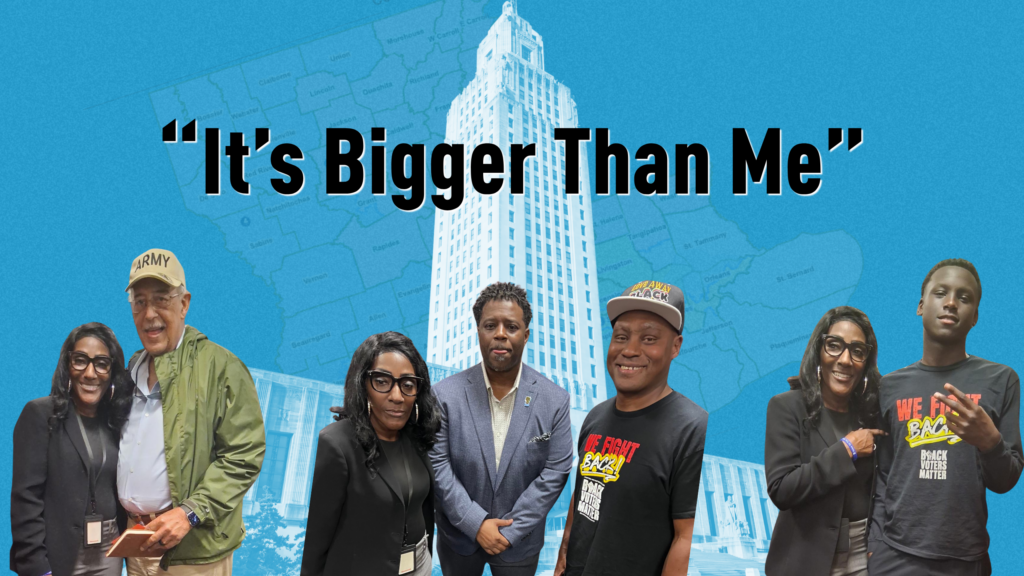
There’s a feeling you get the moment you walk into the Louisiana State Capitol.
It starts before you even reach the committee room.
You walk in, you get checked in, you nod at the familiar faces at the front desk—but once you get past all that, something shifts. The air gets heavy. The building itself feels like it’s telling you: you don’t belong here.
And if you listen too closely, your mind starts to echo it.
What you have to say doesn’t matter.
They’re not going to listen.
You should just leave.
But my feet keep moving anyway.
Up those hard stairs.
Down those long halls.
Into rooms where decisions are made about people’s lives—about my community, about families I know, about the people still locked behind walls and fighting systems that weren’t made to protect them.
Systems that were never broken—systems that were built to break people.
Every time I walk into a committee to testify, my body goes into fight or flight.
My hands tremble.
My chest tightens.
Everything in me says: turn around, walk out, run.
But there’s something stronger than fear.
It’s the commitment I made to the people I serve.
It’s the faces of the families who are waiting for someone to speak up.
It’s the voice of a loved one who can’t stand there themselves.
And I know—if I don’t speak—I’m letting them down.
And that feeling? That’s heavier than fear.
So I stay.
Even when I feel like I don’t belong.
Even when I look into the faces of people who refuse to see me.
Even when I hear laughter, side comments, or watch them scroll their phones like the stories being told in that room aren’t about real human lives.
There are moments I sit there and ask myself:
Why am I doing this?
Why do I keep putting myself through this?
They don’t care.
But then something in me answers back.
What if one person does?
What if one voice reaches someone sitting behind that desk?
What if one story shifts something—even just a little?
What if the record matters, even when the room doesn’t respond?
Because putting it on record matters.
Saying their names matters.
Telling the truth out loud—where they cannot erase it—matters.
So I make myself steady.
I stand at that table.
I become someone stronger than I feel.
Impenetrable, even when I’m shaking inside.
And I speak.
No matter how uncomfortable it is.
No matter how much my body wants to shut down.
No matter how much doubt creeps in.
I speak because I have to.
This isn’t something I do once.
It’s something I do every time.
Every bill.
Every hearing.
Every return to that building that makes me feel small the moment I step inside.
And still—I go back.
Because this fight doesn’t end when I leave the Capitol.
It follows me home.
From the moment my feet hit the floor in the morning
to the moment I lay down at night—
I’m fighting.
For people who look like me.
For families who are trying to survive systems stacked against them.
For the ones still inside, still waiting, still hoping someone out here hasn’t forgotten.
And I’ll be honest:
I’m tired.
I hate that this is the fight we have to fight.
But I’m more afraid of something else.
I’m afraid of what happens if we stop.
Because if we lose hope—
if we stop showing up—
if we decide it’s not worth it—
then we lose everything.
So I keep going back.
Not because it’s easy.
Not because I feel welcome.
Not because I believe those rooms always care.
But because somebody has to stand there.
Because our stories deserve to be heard—even when they try not to hear them.
Because silence would cost too much.
And because somewhere, in the smallest, slimmest chance—
it might make a difference.
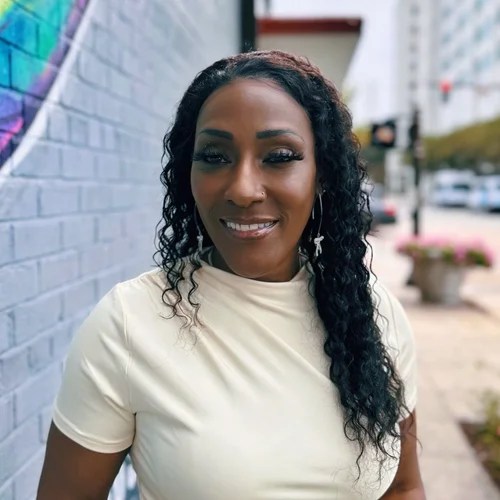
Amelia is a dedicated organizer for Voice of the Experienced in Baton Rouge. She is committed to fighting against overly punitive criminal procedures that disproportionately affect Black communities and champions climate justice. She focuses on critical issues such as housing, mental health, employment, and education, while actively advocating for policy changes that support our most vulnerable populations.
