
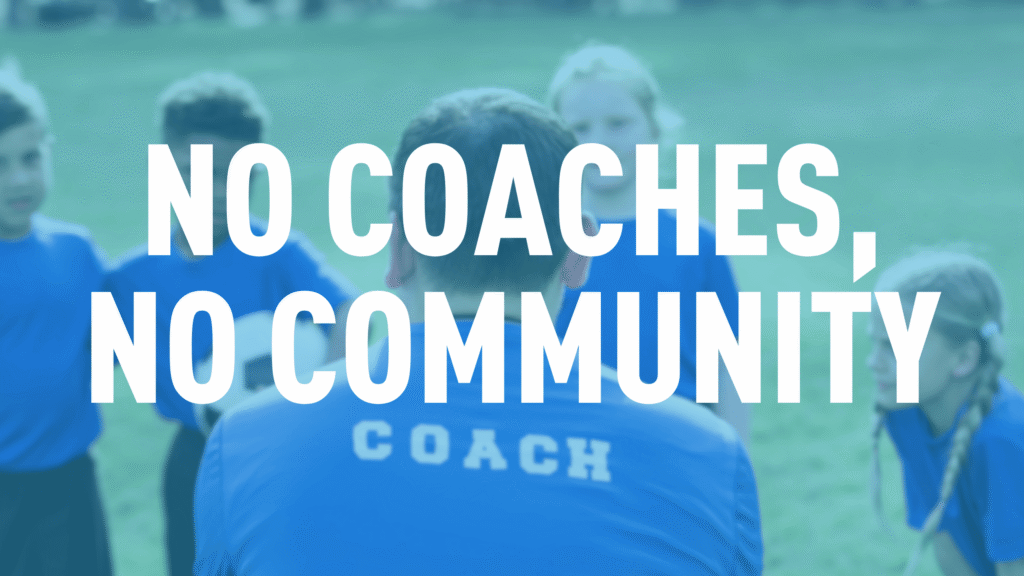
No Coaches, No Community 

Volunteer coaches provide an essential service to NORD’s youth athletics programs. They dedicate their time without receiving wages while assuming significant responsibility for mentoring, supervising, and supporting children throughout the community. 

The fact that a coach is a volunteer rather than a paid City employee does not diminish the importance of the role. However, it does create a clear distinction between volunteer participation and City employment, particularly when it comes to protections, procedures, and accountability. 

Paid City employees and applicants for paid City employment are covered by established employment laws, nondiscrimination requirements, hiring procedures, and avenues for challenging employment decisions. NORD volunteer coaches generally do not have those same employment-law protections simply because they are serving in an unpaid volunteer capacity. 

For volunteer coaches, NORD has a written, outdated policy governing criminal background eligibility. However, volunteers do not have the same statutory employment framework as paid City employees to challenge whether the policy has been applied fairly, consistently, or without discrimination. 

This creates an important concern. A policy may establish eligibility guidelines, but the value of those guidelines depends on NORD applying them consistently to every applicant.  

In other words, any NORD volunteer policy should not only identify who may be disqualified but also provide accountability for how those decisions are made. Without the employment protections and formal remedies available to paid City employees, volunteer applicants may have fewer clearly defined avenues to question a decision, obtain an explanation, or require NORD to demonstrate that its published standards were followed. 

Because volunteer coaches are entrusted with access to children and youth programs, appropriate background checks are both understandable and necessary. At the same time, public safety concerns should not eliminate the need for fairness, consistency, transparency, and accountability. If NORD establishes specific background-screening guidelines, volunteers should reasonably expect those guidelines to be applied as written and equally to all applicants. 

We welcome and fully support policies designed to protect the safety and well-being of the children participating in NORD programs. We also welcome policies that protect the volunteers who dedicate their time and service to these programs. These should not be viewed as competing priorities.  

No coaches mean no community-based youth sports program. Volunteers make these programs possible. Their unpaid status should not mean that eligibility decisions can be made arbitrarily or outside of NORD’s own established guidelines. If NORD relies upon a written Volunteer Policy to determine eligibility, there should also be a meaningful process to ensure that the policy is consistently followed, upheld, and applied fairly. 


This blog post is in response to a New Orleans Inspector General report on Thursday found only about half of a random sample of volunteer coaches at the New Orleans Recreation Development Commission had background checks on file.

Read more here: https://www.nola.com/news/nord-coaches-push-for-fairer-screening-process/article_dfe4db3f-c7f4-44aa-b8b5-d13780c08d53.html
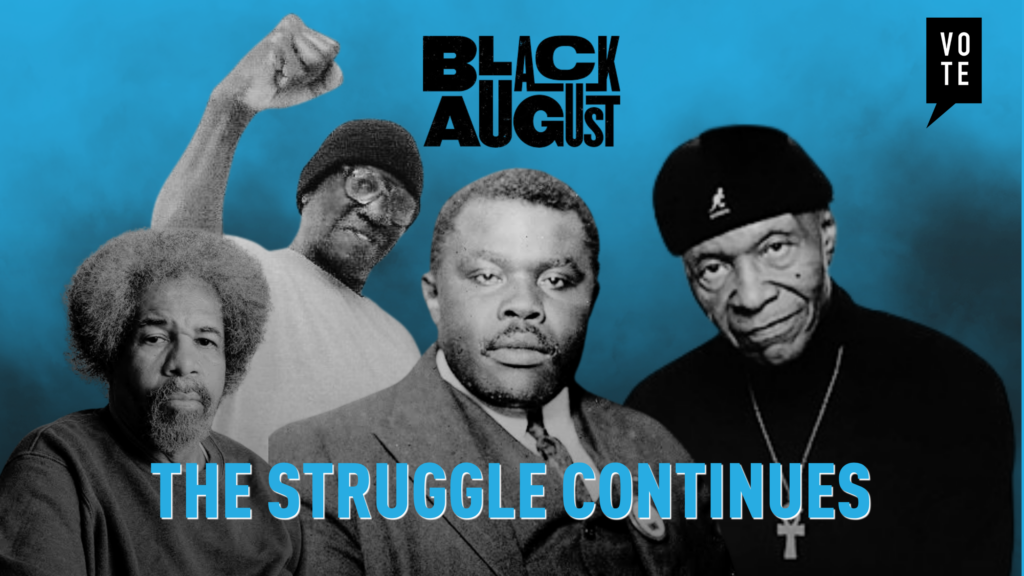
Black August Reminds Us There’s Still Work to Do 

Black August comes out of a tradition we know well: Black people organizing under conditions designed to silence us. 

It grew from the resistance of Black political prisoners and organizers, particularly in California prisons, where August became a time to remember those who gave their lives fighting against racism, incarceration and state violence. We remember Jonathan Jackson, who was killed during the 1970 Marin County Courthouse uprising, and George Jackson, who was killed at San Quentin in 1971. Over time, Black August became more than remembrance. It became a practice of studying our history, honoring our resistance, and carrying the work beyond our pain. 

For us in Louisiana, Black August runs through Angola. We cannot tell this history without remembering Robert Hillary King, Herman Wallace, and Albert Woodfox…the Angola Three who spent decades inside the Louisiana State Penitentiary (and much of it in solitary confinement) yet refused to let isolation sever them from their minds, their politics or the struggle for justice in Louisiana. They studied, organized, and built political consciousness under conditions meant to break them down. As Albert Woodfox put it, “We used education…to help transform ourselves from petty criminals into political activists.” That is what political education can do: it helps us name what is happening to us, understand the systems around us, and recognize that the conditions we inherit do not have to be the conditions we accept. At Angola, learning became a form of resistance, and that resistance became part of a larger movement that reached far beyond the prison walls.  

In 1987, Norris Henderson and other incarcerated men created the Angola Special Civics Project. From inside the prison, they studied government, learned the language of civic life, and began organizing around the belief that their circumstances did not have to determine their future. Henderson’s words still carry that spirit: “Forget your conditions and change your circumstances.” It is the same spirit we hear when he reminds organizers that there is more than one way to do things. There is more than one way to resist, more than one way to organize, and more than one way to move the work forward. Sometimes the path is not the one we were given; it is the one we build together.  

When they came home, the organizing came home with them. That is one of the deepest parts of our organization’s history. VOTE was not born from people standing outside the prison looking in. It came from people who had lived incarceration, studied it, organized through it, carried the pain of it, and still found a way to imagine something beyond it. 

Long before Angola, Black people in this country were bought, sold, separated from their families, worked to exhaustion, beaten, and ripped from their communities to be treated as commodities. Our bodies were turned into property, our labor into wealth, and our humanity into something the system claimed it could own. But even then, we resisted it. We ran. We fought. We protected one another. We organized it. That history lives in Angola. It lives in the people who organized from inside, in the people who came home and in the people who understood that surviving a system is not the same thing as being free from it. 

And that struggle has never belonged to one place. It has always moved across water, borders and generations, connecting people and movements who faced different forms of oppression but recognized something familiar in one another’s fight for dignity, self-determination and freedom. Marcus Garvey organized with a vision of Black people connected across the diaspora. Kwame Nkrumah understood Ghana’s independence as part of a larger African liberation. W.E.B. Du Bois spent his life building bridges across the Black world and its shared needs and desires. Nelson Mandela recognized the solidarity of Black Americans who stood with South Africa in its fight against apartheid. Different places. Different histories. Different battles. But a shared refusal to accept oppression as the final word.  

That is the thread connecting those struggles to Angola and VOTE. The people who organized inside those walls were not waiting for freedom to arrive before they began practicing it. They were creating political consciousness where they were. They were building relationships where isolation was the point. They were making a way where there was not supposed to be one. That is resistance at its finest! And that is why our struggle has never been confined to one place. Neither is our resistance. 

Freedom means being able to return to our families and communities and have a place in them. It means housing, work, education, dignity, and voice. It means being able to speak about the systems that have shaped our lives and having a say in what happens next. Civic engagement is part of that freedom. Organizing is part of it. Voting is part of it, too. 

Black August reminds us that the people before us did not wait for perfect conditions. They organized where they were. They studied inside Angola. They built relationships inside Angola. They resisted inside Angola. And when they came home, they kept building. That is the legacy we carry. We honor the Angola Three not by centering what they’ve endured but by remembering what they built in spite of it. We honor Norris Henderson and the organizers who created the Angola Special Civics Project by continuing the work of political education, civic engagement and organizing. We remember those who resisted behind the walls. We remember those who came home. And we remember that our freedom has always required us to participate in building it together! 

Black August is not just about looking back but carrying that strength forward as we continue the work.  

No surrender, No retreat. 

Written by Sara Louis-Ayo, Chapter Organizer, Baton Rouge